Thinking harder at Saint Ignatius' College

By Jared Centenera:Dean of Staff DevelopmentSaint Ignatius' College South Australia
Over several years of implementing Playberry Laser, we have seen excellent outcomes across the school, particularly in phonics instruction and diagnostic data. That strong foundation has given us the confidence and the headroom to ask a more ambitious instructional question: not just, “Is Playberry working?” but, “How do we get the very most out of it?”
Part of what makes Playberry Laser so effective is the fluency it builds. Because students encounter its routines consistently across multiple year levels- choral response, whiteboard routines, retrieval activities, rule revision- they become highly practised in the structure of the lesson, which frees up cognitive space for the content itself. As that fluency has matured across the school, it has opened up an exciting next layer of practice for us to develop alongside it:
How do we make sure students are thinking as hard as possible about the content they’re retrieving?
Our emerging focus is on being increasingly deliberate about driving student thought around the retrieval and application of spelling rules, phoneme–grapheme correspondences and previously taught knowledge, using Playberry’s structure as the platform for that work.
In particular, we’re interested in strengthening the transfer of what students demonstrate in structured literacy lessons to what they can independently retrieve and apply outside the lesson. We already see very high levels of success during the lessons: the routine, the carefully sequenced content, teacher modelling and gradual release of responsibility give students an exceptionally strong scaffold. Our aim now is to build on that scaffold so success within the lesson converts just as reliably into independent application in reading, spelling and writing beyond it.
This has led us to focus increasingly on the concept of driving thought.
Dan Willingham’s work in Why Don’t Students Like School? has been particularly influential here. At its simplest, the principle is that memory is shaped by what students think about. Students don’t remember something simply because it appeared on a slide, because a teacher explained it clearly, they giggled at it, or because they completed an activity; what matters is the thinking the task actually caused them to do. Playberry Laser’s explicit, sequenced design already puts the right content in front of students at the right time; our job is to make sure every student is doing rich thinking with it.
Consequently, the question we ask ourselves is evolving. It is becoming less:
“Was the lesson engaging, and were students participating?”
and increasingly:
“What, specifically, were students required to think about — and how deeply were they required to think about it?”
This distinction has also shaped our broader instructional coaching work, where we’ve been discussing with teachers that attention and thought are related but not the same thing. A teacher can secure 100% attention while students’ thinking remains relatively shallow -passive listening, copying, predictable choral responses, and repeated low-demand questioning can all produce a highly orderly classroom without requiring every student to retrieve, discriminate, explain, or apply knowledge. For this reason, we’re cautious about treating visible attention or compliance as a proxy for cognitive engagement.
The Playberry Laser scope and sequence provides a strong foundation and does the heavy lifting to ensure the right content is taught in the right order, explicitly and consistently. Our job as teachers is to bring the same intentionality to how students engage with that content, moment to moment, staying responsive to the group of students in front of us and using our judgement about when to add an extra layer of retrieval demand on top of Playberry Laser’s strong base.
Our current work has focused on two complementary approaches.
Approach One: Driving Thought in Playberry Laser lessons
The lesson content and design remain exactly as they are, but teachers have been working on making small, deliberate variations in instructional delivery when they judge that students are ready for greater cognitive demand.
Rather than moving straight into a familiar choral response, for example, a teacher might build in think time before asking students to retrieve a spelling rule. At other times, we might use:
- cold call
- think–pair–share
- everybody writes
- think–pair–write
- individual whiteboard retrieval before discussion
- planned wait time before applying a rule
- short explanations requiring students to justify which rule applies and why
These are small adjustments that vary the retrieval context while maintaining a sense of pace. The knowledge being retrieved stays exactly as Playberry Laser sequences it; what changes is the thinking students must do to access it.
It’s worth noting that Playberry Laser itself is already moving in this direction. Some retrieval activities increasingly vary how students encounter previously taught knowledge to keep them actively retrieving rather than pattern-matching within a familiar format. Our classroom-level adjustments are designed to work in the same spirit, extending that same principle further into daily practice.
Approach Two: Driving thought beyond the Playberry Laser Lesson
If a spelling rule, phoneme–grapheme correspondence or piece of knowledge has been explicitly retrieved within the lesson, how can we give students another opportunity to think about and apply that same knowledge in a slightly different context, so it truly sticks?
This doesn’t require an additional lesson. In many cases, it happens immediately after explicit instruction, through activities already connected to the program sequence. For example, teachers use Read and Grab (downloadable from Tier 2 resources) activities to give students more independent retrieval practice with knowledge just revisited as a class. From the connected texts, we generate independent retrieval tasks in which students identify or explain a specific spelling concept or phoneme–grapheme correspondences, and create word banks. Some teachers have also developed short retrieval tasks that ask students to independently generate examples, discriminate between possible rules, explain why a rule applies, or locate examples of the target knowledge in their own reading or writing.
The important shift is in context. Students move from applying knowledge:
Within Playberry Laser’s highly structured routines → with teacher direction and collective responses → towards increasingly independent retrieval and application.
We see this as the natural next step from the foundation Playberry Laser provides, a bridge between successful performance during explicit instruction and genuine transfer into reading and writing.
The Role of Instructional Coaching
Our instructional coaching work through Steplab has been particularly useful in supporting this development.
For classes that are already highly successful with the lesson routine, coaching offers a chance to look for the next opportunity to extend that success, to find moments when we could ask a little more of students’ thinking without changing anything about the program itself. A coach can help a teacher spot these moments and make small, high-leverage adjustments.
The coaching conversation gets very specific:
- What do we want students thinking about here?
- Who is doing the thinking?
- Does every student need to retrieve the answer, or can some rely on the group’s response?
- Could we vary the response mode without changing the content?
- What’s the next opportunity to extend independent retrieval a little further?
- How could we check that students can retrieve and apply this knowledge independently, beyond the lesson?
This is where we see a particularly powerful intersection between Playberry Laser and instructional coaching. Playberry Laser provides the curricular architecture and explicit instructional sequence; coaching helps teachers get even more out of it by staying responsive to the cognitive demands placed on the students in front of them.
Ultimately, this work is not about adding activities or moving away from fidelity of the scope and sequence, quite the opposite. It’s about using its strength as a platform to deliver increasingly precise teaching and to get the fullest possible return from a solid program.
As implementation matures, our question is becoming: how do we retain the consistency, pace and explicitness that make it work while continuing to sharpen the thinking students do within it?
Our approach is to continually monitor the relationship among attention, participation, and thought, and to use that insight to further extend Playberry Laser’s impact by varying the context, increasing retrieval demand, creating opportunities for independent application, and verifying that knowledge transfers.
The aim is not simply for students to become excellent at participating in a lesson. The aim is for the knowledge the scope and sequence contains to become increasingly retrievable, flexible and usable wherever students need it.
See the bottom of the newsletter for an article from Newsletter 7 on ways to ratchet up retrieval effort.
Mini-Whiteboards: Beyond the "chin it" ritual
If you’re like most, there are plenty of teaching approaches you’ve adopted because you’ve seen them working well as part of somebody else’s teaching. We saw a trusted colleague doing it; it seemed effective, so we ran with it, and pretty soon it became a ritual in our room. Here we look at the use of student whiteboards as one such ritual and dive into the underlying mechanisms.
Student whiteboards: “An amazing piece of kit”
In Dyscastia episode 16, Michael and I spoke to David (Dave) Morkunas, ex Bentleigh West Primary and Brandon Park Primary, one of the founders of the Explicit Maths Program (EMP), about the importance of daily review. Dave referred to student whiteboards as “an amazing piece of kit”, one of many ‘Morkisms’ that have stuck with me. But what are the underlying reasons student whiteboards are prevalent in Australian classrooms, other than that it looks really cool when 25+ students chin their boards in complete unison? Why do we see them in classrooms where literacy and mathematics are being taught explicitly?
High rates of response and whole-class participation
When students write on a whiteboard – a spelling word, a sentence type, an algorithm, a numeral or even an answer to a multiple-choice question- they are responding, and this indicates that they are thinking. Generative responses are an effective way to get students thinking, and, as Dan Willingham reminds us, memory is the residue of thought. Students must think and generate, not passively wait on others to do the work. Passivity and inattention have a devastating impact on learning.
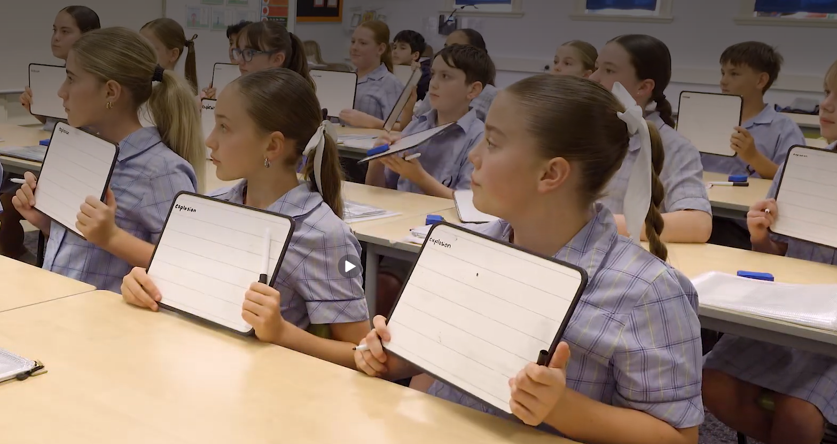
“Fix spelling mistakes while they’re fresh.”
This is a cool saying I heard on a recent episode of Melissa and Lori’s podcast about the science of spelling. Every time a student spells a word, they strengthen their mental (orthographic and phonemic) representation of that word, for better or worse! In the image above, students have just spelt ‘explosion’ during a morphology lesson, and their teacher, Adam, is doing a quick scan, ready to correct any errors. My bet is that he’s checking the ‘sion’ end pattern closely and will prompt any corrections there and then while the mistake is fresh. If these students had written ‘explotion’ incorrectly in a book, there’s a good chance this mistake would be missed and the incorrect representation would be strengthened. This is why we must have a thorough scan of boards when students chin them, or circulate and check words during words-to-spell. You don’t need to do both. If you’re confident you’ve seen all boards on your circulation, then there’s no real need to ask students to chin their boards.
Efficient checks for student understanding – trust but verify
We routinely overestimate what students have understood. We might ask questions like “Does everybody understand?” or worse, “Who doesn’t understand?” Then, when we hear crickets from the class, we take that as a signal to teach on, blissfully unaware of what students are actually understanding (or misunderstanding).
Another ineffective way we try to see who does and doesn’t get what is to ask a question and wait for hands up (volunteers). Who sticks up their hand? The students who are pretty confident they understand are the ones who will likely understand. Occasionally, this approach reveals that a student didn’t understand; however, it’s done publicly and can be pretty embarrassing for the volunteer.
“Learning isn’t just cognitive, it’s emotional, and it can feel deeply vulnerable. When students fear embarrassment from giving a wrong answer … they may withdraw to protect themselves…” (Steplab ‘Evidence-Informed Teaching’ Online course)
So why do we ask a question and ask for hands up? If we are trying to assess whether students understand what we’re teaching, then this method is a fairly weak way to obtain a representative sample. If you’re a maths teacher, you can see immediately what is wrong with this sampling method. There’s a dangerous assumption that underlies this method, and it goes like this – because I’ve taught it, they’ve learnt it. Really? It’s far safer to assume the opposite and assume they haven’t learnt it. “But I trust my ability as a teacher“, you might be thinking. You’re probably a fantastic teacher, but in the words of former US President Ronald Reagan, we need to trust but verify.
Whole-class assessment is a far safer bet for verifying what students are learning, and student whiteboards are a very handy piece of kit for this. It’s more rigorous than asking for hands up, or asking “Does everyone understand?” When we can ask pre-planned questions (the best type) to the class and have all students answer on whiteboards, we don’t just have a data sample; we have a population. This lets us scan the room for patterns of correct answers and common errors, uncovering any widespread misconceptions. With this feedback, we can make important decisions about whether to quickly correct errors and/or provide additional whole-class or targeted practice or to completely reteach something.
Low-stakes rehearsal
For many students, being able to make a quick correction on their whiteboard can reduce some of the worry about making mistakes. Although teachers do get important data from seeing errors on student whiteboards, the swiftness with which an error can be corrected, or a change made on a whiteboard, does appeal!
Active retrieval and raised accountability:
For most teachers who use student whiteboards, we’re kind of in no-brainer territory now, because you’ve already clocked that whiteboard responses often serve as a form of retrieval. And while in no-brainer territory, having to produce a whiteboard response also makes it harder for students to opt out. It also gives students time to think before anyone responds publicly, which can support quieter learners and reduce the risk of answer copying.
Peer discussion and comparison:
If you’re using think-pair-share responses, students can explain, compare, and improve their whiteboard responses with a partner. Mini whiteboards can be a very handy piece of kit to support peer-to-peer feedback.
Beyond the ‘chin it’ ritual
Mini whiteboards themselves are not the intervention; they’re a piece of kit that exponentially increases the speed at which teachers can gather feedback. Their utility lies in the responsive teaching that follows scanning whiteboards. We’ve created a module that covers what responsive teaching is if you’d like to read more about it.
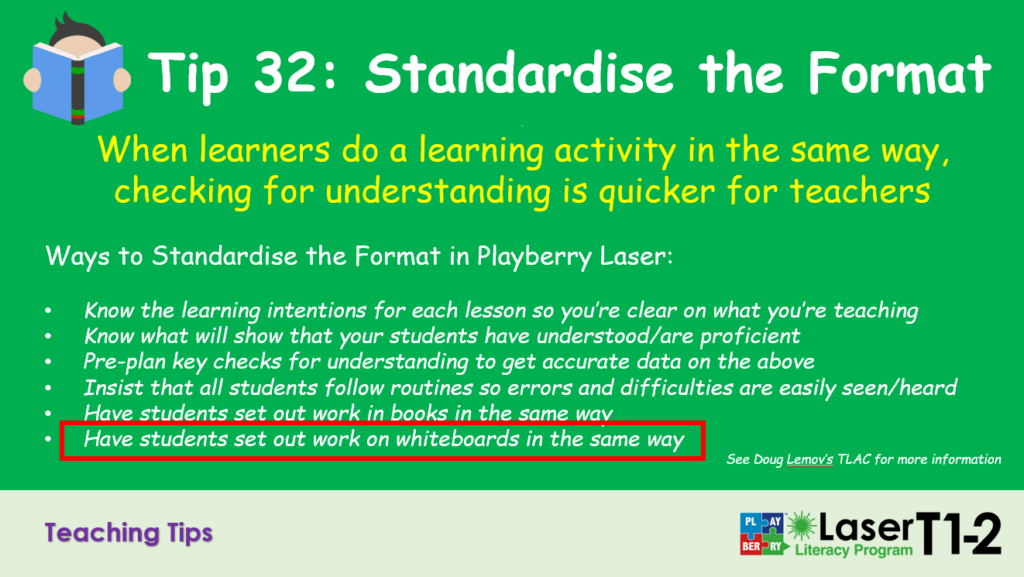
Have students set out work on mini whiteboards in the same way
In the image above, you’ll notice that the word ‘explosion’ is in the upper-left corner of all whiteboards. This isn’t by chance; Adam has standardised the format by making it routine for all students to write words there. Why? Because it speeds up his scanning time. The additional milliseconds it takes to find a response on a student whiteboard, when responses are all over the boards, add up over the course of a teaching year.

Updated Teacher Manual
Our compulsory nuts-and-bolts training is only just a start – the tip of the iceberg. Our highest-performing schools consistently refer to the teacher manual, which is available in the ‘how to’ section of the website. These schools build mini in-house staff training sessions for each component of the Playberry laser lesson, using the manual as a resource.
The updated 2026 teacher manual is now full of videos that hone in on routines with laser-like focus (no pun intended) so you can see exactly how expert teachers run the different parts of Playberry Laser lessons. Where possible, we’ve provided videos from early and later primary lessons.
We have to apologise to the teachers who like to print the teacher manual. With these embedded videos, a paper version won’t be as helpful. Keep a tab open so you can jump in whenever you need!
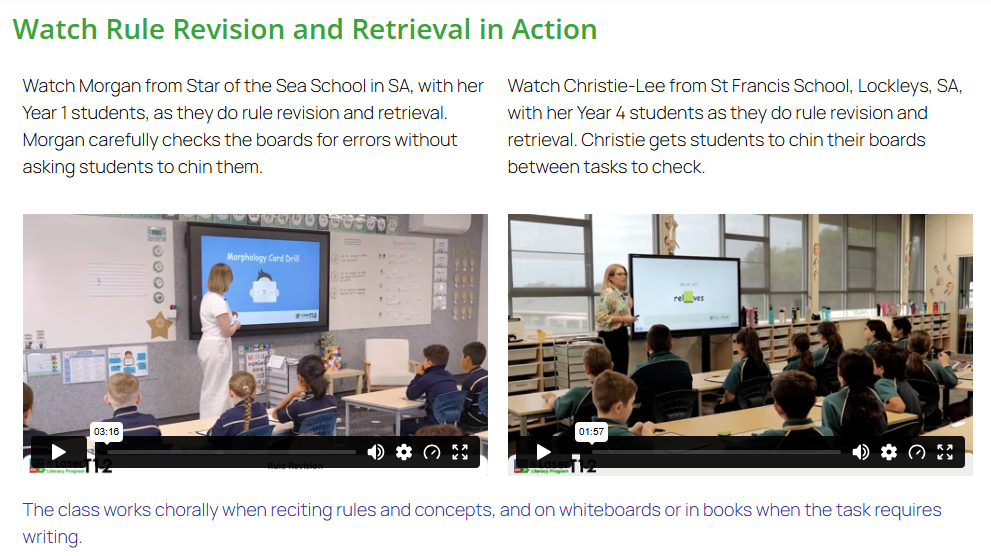
Book live demonstration lessons and observations
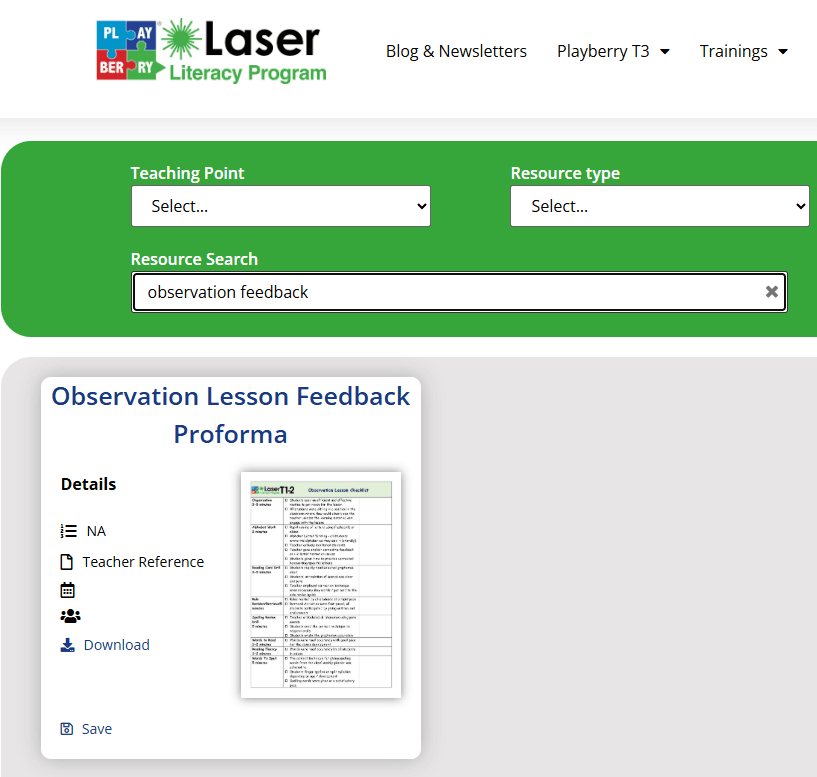
The schools that get the teaching the tightest, the fastest get us in within a few weeks (or months) of starting the program to teach classes whilst teachers observe. This clears up many lethal mutations early and sets teachers up for success. A few months later, we’re invited back to observe teachers in action. When we do this, we are accompanied by the school’s key literacy teacher (or whoever is doing the instructional coaching) so they can see us at work during coaching conversations. Our goal is to set up schools for in-house instructional coaching cycles so everyone’s practice continues to improve. We’re currently exploring Steplab to sharpen our instructional coaching model, so watch this space.
Morphology Multisensory Actions in One Place
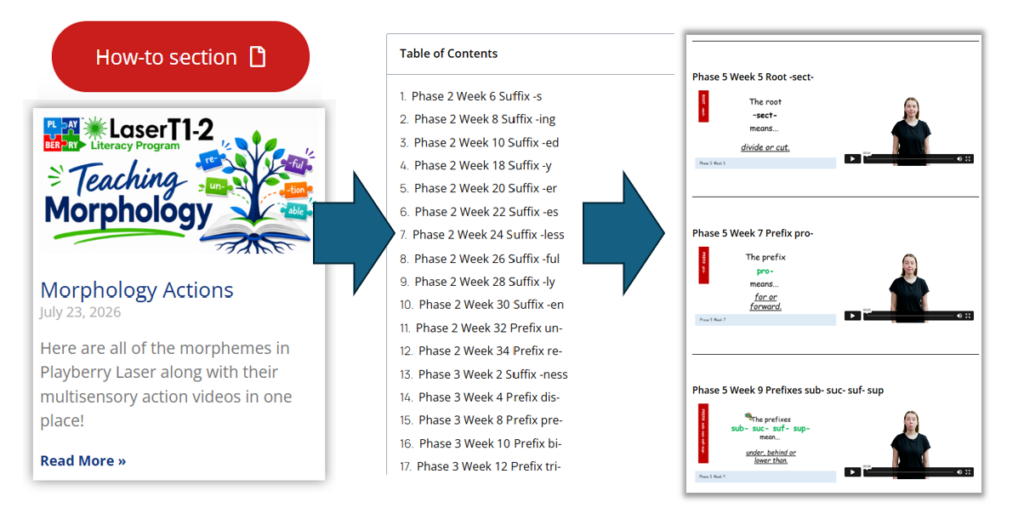
You’ve been asking, so here it is!
Many hours and a little bit of swearing at the computer (by Bill) have yielded a one-stop shop for all of the introductory slides and embedded multisensory action videos with Millah Hansberry (yes, she’s very real and very-not-AI). Teachers who want to get up to speed without trawling through lesson slides will find this page very use + ful.
Free training Module for whole staff in-house PD
Responsive teaching is at the heart of Playberry Laser, but being able to respond to assessment data (as we teach) is easier said than done. Teachers collect data in all sorts of ways; from listening to students’ responses when questioned to listening as students read connected texts and looking at whiteboard responses. In addition to this data, we also have reading and spelling assessments that take place every 10 weeks across phases 1-5. These are criterion based (see Newsletter 2 fore more on criterion based assessment) ,
formative assessments that give us additional information about what’s sticking, what needs additional practice and what might need a complete re-teach. We have a system for responding to this data that we cover in this free module.
Watch it here or in the 'How-to-section' of the Playberry Laser Platform
New Resources
Phase 1 Reading Card Decks for Individual Practice
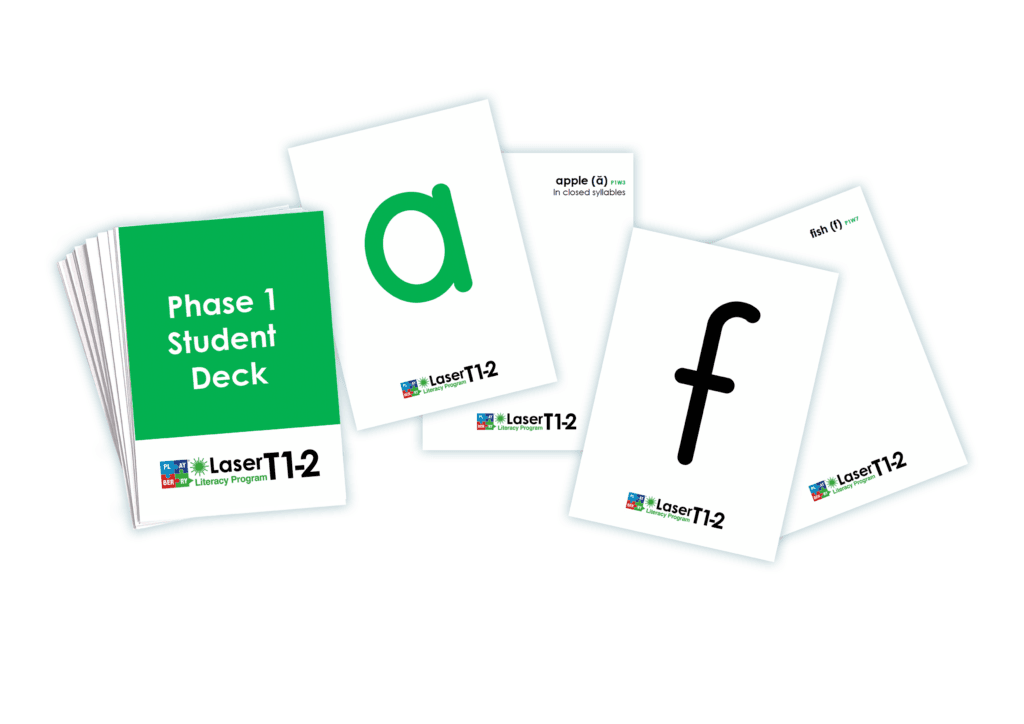
Every class has students who need more practice with the reading card deck. We have a solution. This card deck is for individual student practice of the grapheme phoneme correspondences already taught.
Class set of 25 decks $125+GST
Individual deck $6+GST
The Phase 1 Student Card Deck includes the grapheme-phoneme correspondences taught in the Playberry Laser Phase 1 Scope and Sequence.
The cards are 5 x 7 cm and robust, so they will last a long time if treated well!
5 Minute Reviews - Downloadable
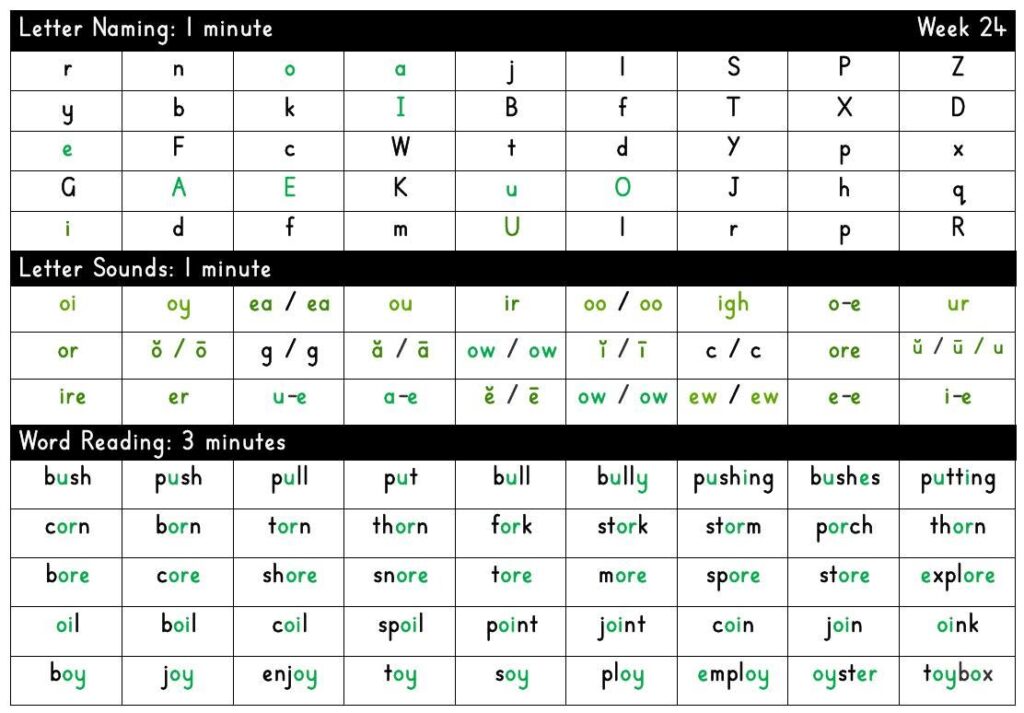
Great for increasing fluency, reviewing, and reinforcing letter naming, letter sounds, and word reading. These are found in the Resources section within Phases 1 and 2.
These downloadable activities are inspired by some very clever work we saw at Pirie West Primary School. These are great practice for increasing word reading and letter-naming fluency. Students enjoy the challenge of going against the clock to improve their times.
These are downloadable from the resources section on the phase 1 and 2 pages.
Reading Revision Slide Decks
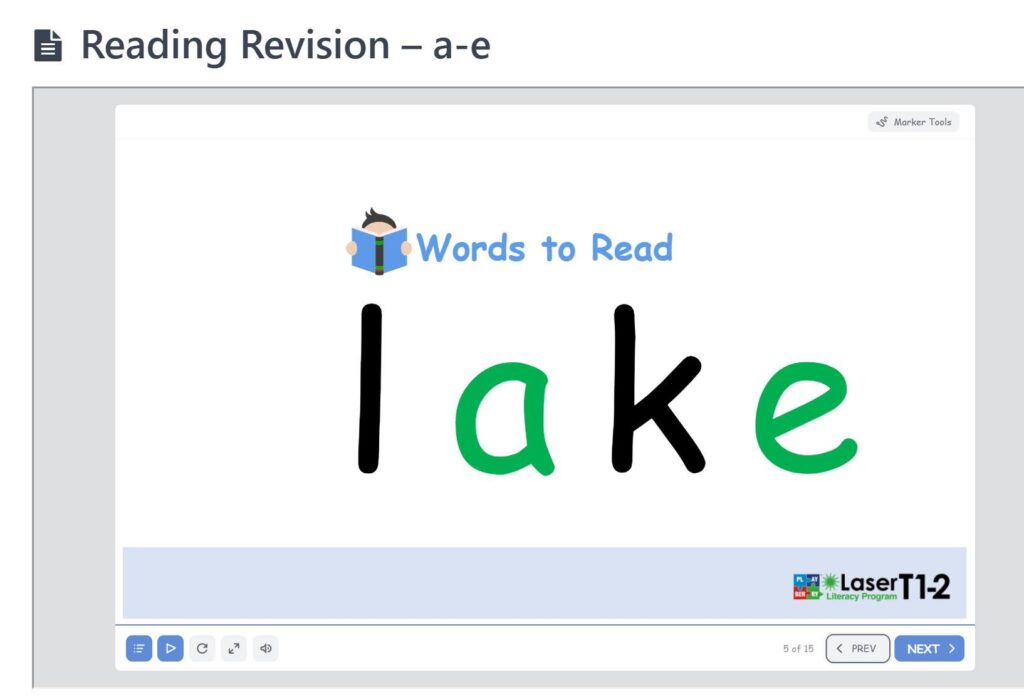
Use these supplementary slide decks for extra blending and reading practice outside your daily Playberry Laser lesson. Use in small, targeted groups or as a whole-class review.These slides include matching Fluency Reading Sheets that can be used in class or as homework.
Find these under your Phase 1 and 2 lessons in your Phase page.
Word Fluency Reading Sheets - Downloadable
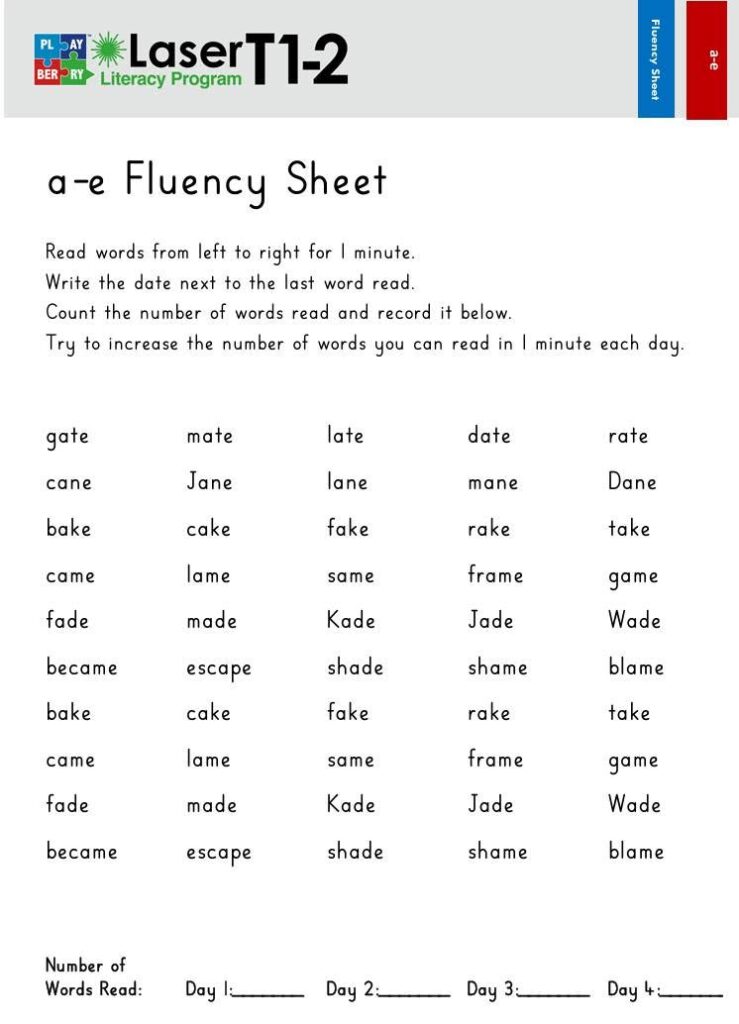
These word-reading lists provide brief, focused practice with previously taught phonics, spelling and word-structure concepts. They help students read familiar patterns more accurately and efficiently, supporting word-reading fluency.
Many students need additional, cumulative review before learning becomes secure. A short list lets students practise target orthographic patterns, without the added demands of vocabulary, syntax and comprehension in connected text.
Guided repeated oral reading with feedback is supported by a large body of evidence for improving word recognition and fluency.
Use these lists alongside the Reading Revision Slide Decks for short, successful review. The goal is not speed alone or memorising words, but increasingly automatic application of the code students have been taught.
Find them via Resources within Phase 1 or Phase 2.
Upcoming Tier 3 Trainings
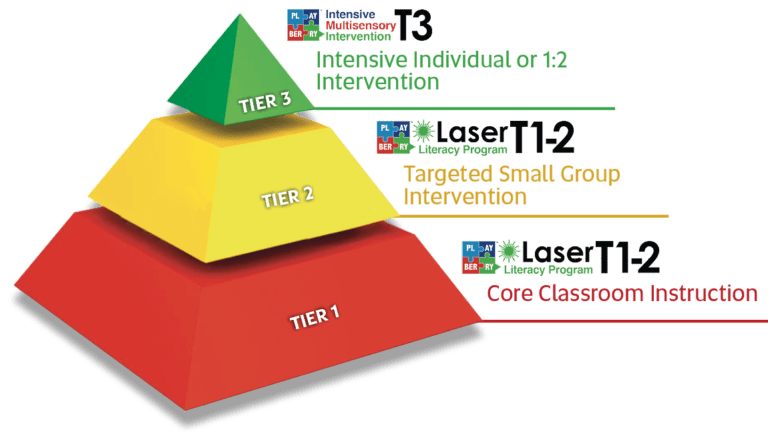
The Playberry (Playford & Hansberry) T3 Multisensory Literacy Program is a tier 3, intensive intervention for students with severe reading and spelling difficulties. Playberry T3 is the intervention program of choice for schools using Playberry Laser T1-2.
Playberry T3 is used by specialist intervention teachers, speech and language pathologists and specialist tutors who have trained in the TSD courses (Teaching Students with Dyslexia levels 1-3).
Upcoming Tier 2 Training
The Playberry Laser Tier 2 training day is for teachers and support staff who teach intervention groups using the Playberry Laser Tier 2 resources. Participants will learn how to deliver Tier 2 Intervention Lessons, assess progress, and access resources. The day also includes observing a demonstration lesson with students.
Participants must bring a mini whiteboard and a whiteboard marker.
Monday 14th September 2026
Star of the Sea School, Henley Beach, SA
Morning tea provided. BYO Lunch.
9:30 am – 3:00 pm.
Remember, training information will only go the person who made the booking.
Subscriptions Due Late September-October
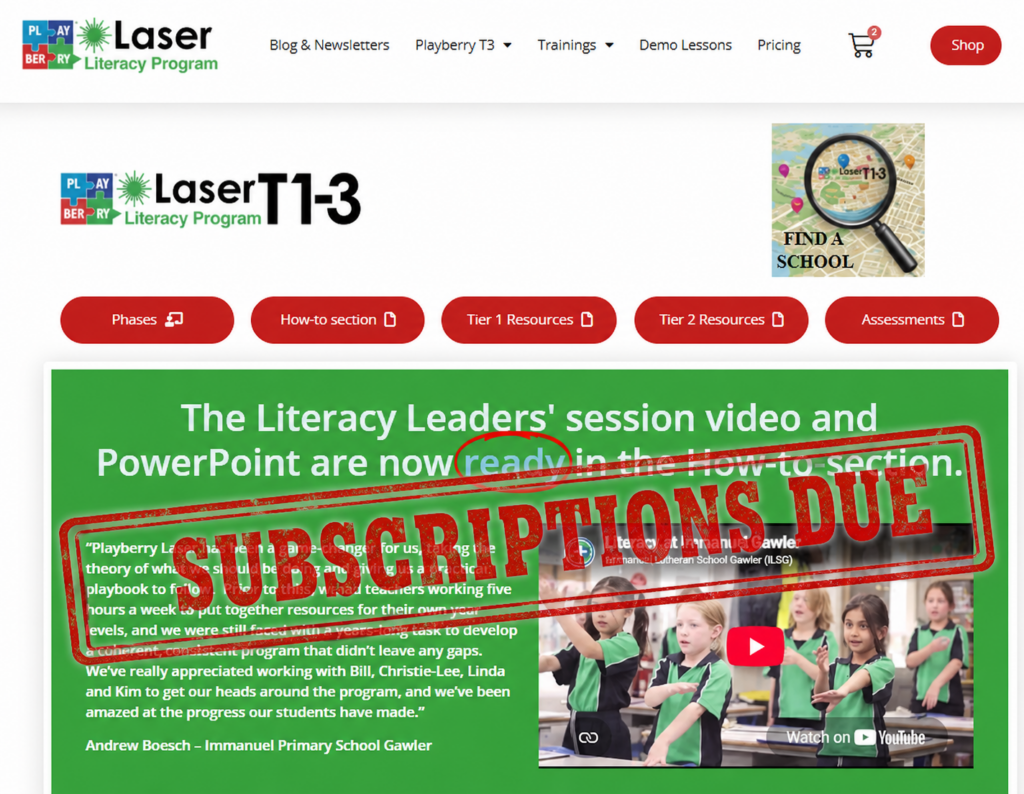
Most schools’ subscriptions will be due for 12-month renewals in September and October.
Please ask your business manager to keep an eye out for this.
We take all possible measures to make sure that schools aren’t automatically removed from access, but this has happened in a few cases.
Here's an article from Newsletter 7 on the benefits of making students think harder during retrieval practice.
Ratcheting up the Retrieval Effort During Review
Research on desirable difficulties shows that making retrieval effortful can strengthen learning. Björk and colleagues distinguish between storage strength and retrieval strength, arguing that difficult but successful retrieval boosts long-term storage more than easy review. One of these desirable difficulties is ‘varying the conditions of practice’. Learning something in the same way (under constrained, predictable conditions) can lead to contextualised learning that does not support later performance.
These findings have led us to reconsider our definition and rule retrieval slides. We don’t want you to limit retrieval opportunities to only what the slides tell us to do. We want you to start to ratchet the retrieval effort on the occasional slide when you can.
Now, doing this during review risks blowing out the time it takes to complete this part of the lesson (which is designed to be quick-fire), so be careful to choose fast ways to get students applying their knowledge.
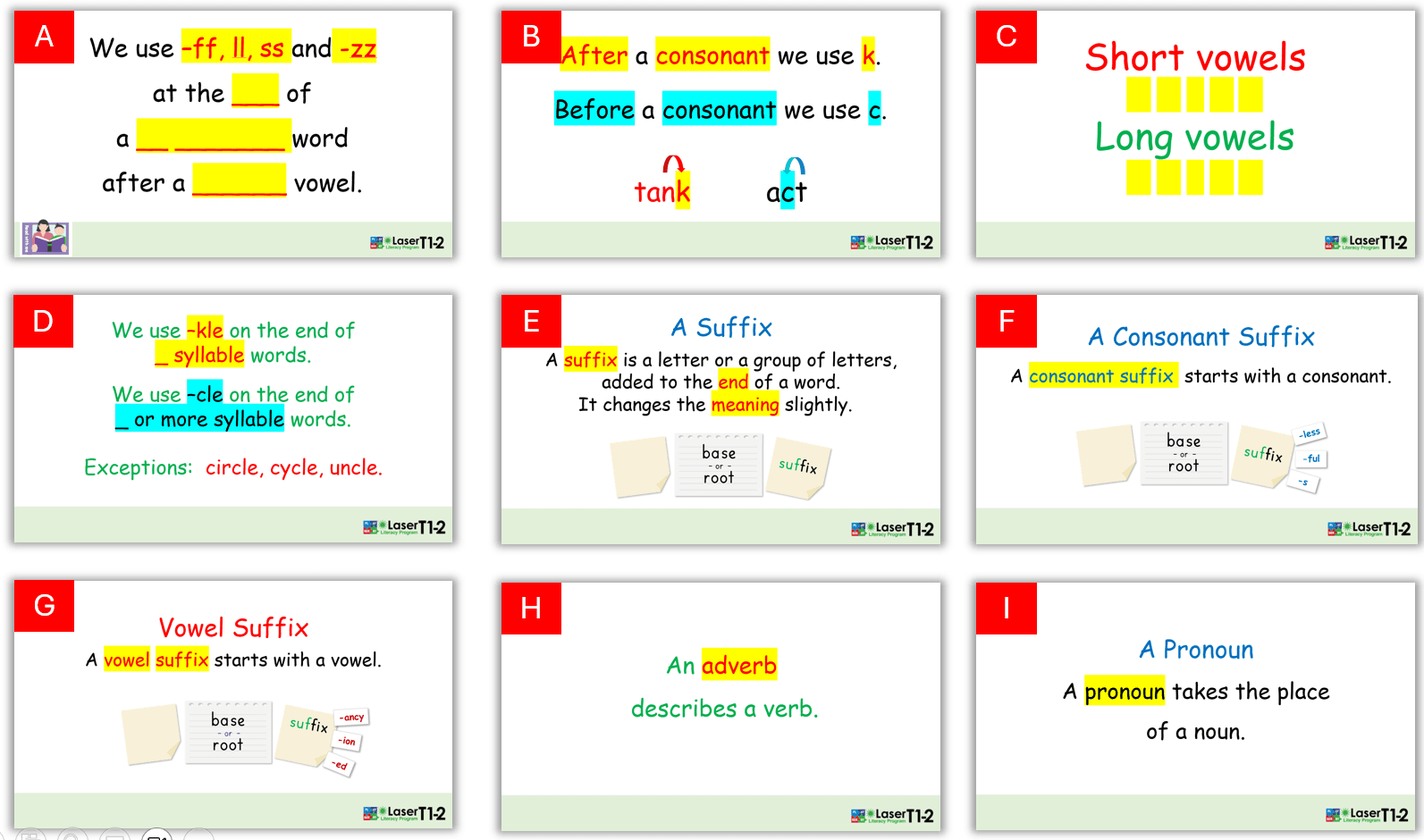
On the right are some ideas for the slides you might try.
Slide A: Students write a non-word on their whiteboards using the spelling rule and then chin it. Responses might be ‘ploff’ or ‘smezz’.
Slide B: Students deliberately misspell ‘tank’ or ‘act’ (or any other word) on their whiteboards by using a spelling of (k) that deliberately breaks the rule.
Slide C: Students write a word with a short/long vowel and chin it.
Slide D: Write ‘barnakle’ (or another deliberately misspelt word) on the board – A’s tell B’s why it’s misspelt.
Slide E: Write ‘redo’, ‘doing’ and ‘wash’ on the board, and students write the word with the suffix and chin it.
Slide F: Write ‘helpful’, ‘kindness’ and ‘helped’ on the board: students write the word(s) with the consonant suffix on their boards and chin it.
Slide G: Write ‘helpful’, ‘kindness’, and ‘helped’ on the board. Students write the word(s) with the vowel suffix on their boards and chin it.
Slide H: Students turn the verbs ‘quick’ and helpless’ into adverbs and chin it.
Slide I: Students list as many pronouns as they can in 10 seconds, then chin it