
Playberry Laser T1-2 Newsletter 1

In this edition:
Additive Blending in Phase 1 …
Teaching Heart Words Well …
2025 Training Dates …
Phase 0 Has Lift-Off! …
Lesson Videos ….
We Have a How-to Section
The downside of a quick start in structured literacy
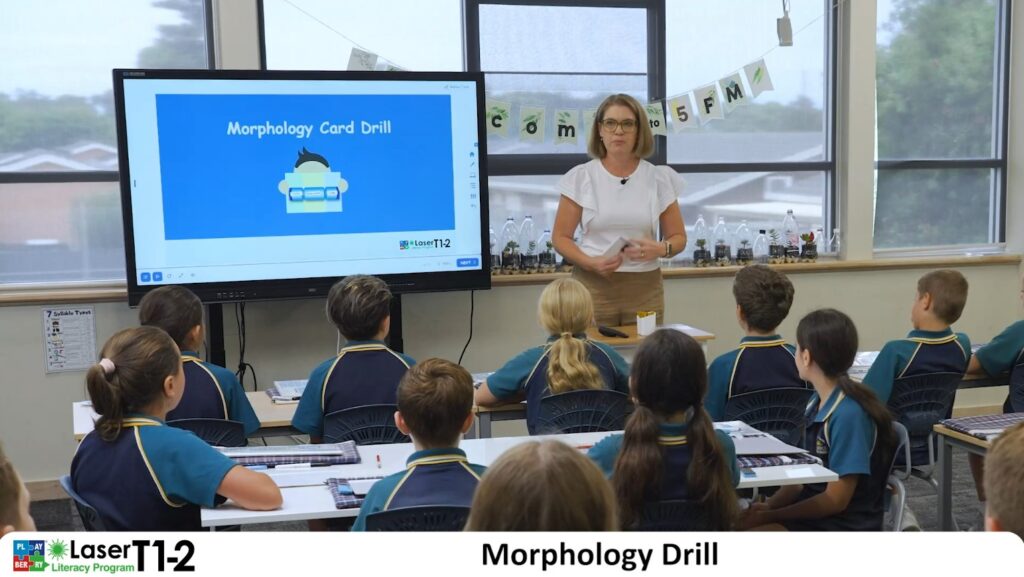
Playberry Laser has freed teachers from having to create materials so they can get on with the job of teaching. This has a downside. When teachers are provided with materials, they miss the learning that comes with designing the instructional materials and because of this, miss important learning about ‘why’ of the ‘how’ we ask them to teach. This places a huge importance on leaders to know how the materials are to be used and to set up cycles of observation and feedback with teachers.
Leaders, where is where your schools need you to get brave!
Why teach spelling rules?
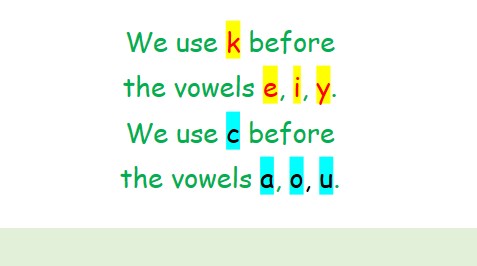
There’s been some conversation recently about structured literacy programs that don’t teach the most important spelling rules (generalisations) to students. This leads to the broader conversation about whether spelling rules are an unnecessary distraction, and whether just teaching ‘more common’ and ‘less common’ spelling patterns is the way to go.
In this post, I discuss why at Playberry Laser T1-2 and Playberry T3, we place a strong emphasis on teaching spelling rules, and why failing to teach them dooms too many students to ‘safe’ spelling choices when it comes to writing.
Handwriting – Why Bother with Cursive?

Anna Gillingham (the ‘G’ in ‘OG’) advocated teaching cursive from the beginning and many specialist schools for students with Dyslexia do the same. In many European countries, cursive is taught from the beginning of schooling. In Australia, just mentioning cursive to a room of teachers will draw out all sorts of strong opinions and sometimes heated debate. Regardless of a school’s position on the teaching of cursive, we advocate for a school-wide approach to teaching handwriting.
Consistency is the greatest gift schools can give students when it comes to handwriting.
Rosenshine’s Principle 10 : Engage students in weekly and monthly review: Students need to be involved in extensive practice in order to develop well-connected and automatic knowledge.

Rosenshine’s Principles of Instruction are at the heart of how we teach in Playberry Laser. These principles have gained momentum, prompting us all to consider whether our teaching is compatible with human cognitive architecture. In this blog series I will unpack each of Rosenshine’s ten principles.
Rosenshine’s Principle 9: Require and monitor independent practice: Students need extensive, successful, independent practice in order for skills and knowledge to become automatic.

Rosenshine’s Principles of Instruction are at the heart of how we teach in Playberry Laser. These principles have gained momentum, prompting us all to consider whether our teaching is compatible with human cognitive architecture. In this blog series I will unpack each of Rosenshine’s ten principles.
Rosenshine’s Principle 8: Provide scaffolds for difficult tasks: The teacher provides students with temporary supports and scaffolds to assist them when they learn difficult tasks.

Rosenshine’s Principles of Instruction are at the heart of how we teach in Playberry Laser. These principles have gained momentum, prompting us all to consider whether our teaching is compatible with human cognitive architecture. In this blog series I will unpack each of Rosenshine’s ten principles.
Rosenshine’s Principle 6: Check for student understanding: Checking for student understanding at each point can help students learn the material with fewer errors.

Rosenshine’s Principles of Instruction are at the heart of how we teach in Playberry Laser. These principles have gained momentum, prompting us all to consider whether our teaching is compatible with human cognitive architecture. In this blog series I will unpack each of Rosenshine’s ten principles.
Rosenshine’s Principle 7: Obtain a high success rate: It is important for students to achieve a high success rate during classroom instruction.

Rosenshine’s Principles of Instruction are at the heart of how we teach in Playberry Laser. These principles have gained momentum, prompting us all to consider whether our teaching is compatible with human cognitive architecture. In this blog series I will unpack each of Rosenshine’s ten principles.
Rosenshine’s Principle 5: Guide student practice: Successful teachers spend more time guiding students’ practice of new material.

Rosenshine’s Principles of Instruction are at the heart of how we teach in Playberry Laser. These principles have gained momentum, prompting us all to consider whether our teaching is compatible with human cognitive architecture. In this blog series I will unpack each of Rosenshine’s ten principles.